How to Create a Nonprofit Travel and Expense Policy in 2026
A nonprofit travel and expense policy should identify who approves each trip, which fund pays for it, and what evidence finance needs. Use one base policy, then account for any additional conditions tied to specific grants or funding sources before booking. Approval alone doesn’t establish grant allowability of an expense.
This 2026 guide covers how to establish clear, consistent spending rules, manage funding restrictions, and maintain accountability for travel spending.
If you want a general overview rather than nonprofit-specific guidance, see our travel and expense policy steps and best practices.
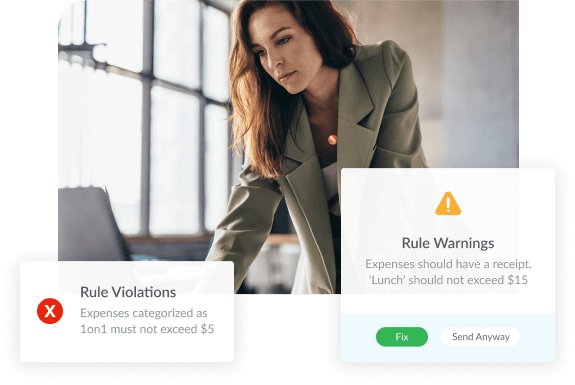
Why an approved expense can still be the wrong charge
Suppose a program manager approves a hotel booking that sits inside the policy's nightly limit, and the controller charges it to a federal award. The charge still has to meet the conditions of 2 CFR 200.403:The cost must be necessary and reasonable for the award, allocable to it, consistent with uniform organizational policy, and adequately documented.
Manager approval leaves the award questions open. Approval and allowability therefore answer different questions. Keep them separate in the policy:
- Approval establishes whether someone with authority agreed to the spend
- Allowability establishes whether a funding source permits charging the cost to it
Manager approval is one form of expense policy control, alongside documentation, categorization, tax, and accounting checks. Nonprofits also need to check the funding agreement’s allowability. Build the approval process through clear travel and expense policy steps, and connect expense reimbursement rules to expense management controls.
Five rule sets that touch a nonprofit trip
Five sets of rules govern a nonprofit trip, depending on the funding, the traveler, and the organization. Their decisions are not interchangeable: IRS rules determine the tax treatment of reimbursements, while funding agreements decide whether a grant accepts the charge. One trip can therefore pass one test and fail another.
Each rule set decides a different question and covers different people or sources:
| Rule set | What it decides | Who or what it covers | Where to read it |
|---|---|---|---|
| Organizational policy | What the organization permits and who approves it | Everyone the policy names. Under a federal award, it also serves as the benchmark for a reasonable cost | Board-approved policy and procedures |
| IRS rules | Whether reimbursements are taxable pay, what proof of travel is required, and what Form 990 filers report | Employees, officers, and volunteers who are reimbursed, and Form 990 filers | 26 CFR 1.62-2,Publication 463,Schedule J instructions |
| Federal award requirements | Whether a cost can be charged to a federal award | Federal grants, cooperative agreements, and subawards, with specified exceptions and some provisions also applying to federal contracts | 2 CFR 200.403,federal travel cost rule, and the award terms |
| Donor and funder restrictions | Which purposes a gift or private grant can pay for, plus any travel limits in the agreement | The specific gift or grant | Gift agreement, grant letter, approved budget |
| Accounting standards | How the expense is classified, including net assets with or without donor restrictions and program, management and general, or fundraising function | Financial statements and Form 990 Part IX | FASB ASU 2016-14,Form 990 instructions |
Match each decision to its governing rule before approving, charging, or recording the trip.
When 2 CFR Part 200 applies
2 CFR Part 200, the federal Uniform Guidance, applies to federal grants and cooperative agreements subject to program and section-specific exceptions. Applicable award terms generally flow down to subawards. A privately funded program follows its own agreement unless that agreement adopts federal requirements.
The instrument type and the governing version can change the answer. Confirm three points with the awarding or contracting official:
- Contract terms: Some Part 200 provisions also apply to federal contracts and subcontracts, but the Federal Acquisition Regulation or contract terms prevail in the event of a conflict
- Award version: OMB's 2024 revisions took effect October 1, 2024, and agencies were directed to apply them to awards entered into on or after that date
- Conference costs: OMB's May 29, 2026 proposed rule would require express federal agency approval of conference attendance costs in the award, but the October 22, 2026 eCFR text of conference cost requirements does not contain that requirement
Recheck the award version and the proposal's status before charging conference costs.
Five decision checks for every trip
Treat these five checks as a practical sequence for every trip request, not a regulatory or accounting standard:
- Policy permission: The approver checks the request against the policy or records an exception.
- Funding allowability: The grants manager checks the award terms, the applicable 2 CFR 200 sections, or the donor letter for the source being charged.
- Allocation and documentation: Finance confirms the split basis, the justification for the traveler need, and the receipts.
- Approval authority: The policy's spending tiers decide, with additional sign-off for restricted sources and executive travel. Configure your expense approval workflow to match those decision rights.
- Accounting treatment: Finance codes the fund, the net asset class, the functional class, and any exception flag.
A failed policy or funding check calls for a permitted exception, an eligible alternative funding source, or cancellation. Changing the funding source does not make a trip permissible under the organization’s policy.
Realistic scenarios and the decisions each one needs
Every trip request needs three separate answers: whether policy permits it, whether the funding agreement allows the charge, and how finance allocates and documents it. The approver and the accounting entry follow from those answers. Results depend on the organization’s policy and the award terms.
Five realistic trips show how the answers differ:
| Scenario | Permitted under policy? | Allowable under the funding agreement? | Allocated and documented how? | Who approves? | How finance records it |
|---|---|---|---|---|---|
| Program director flies coach to a kickoff meeting that a federal award requires | Yes, within fare and lodging limits | Likely, if participation is necessary for the award and costs match policy (200.403, 200.475) | 100% to the award. Request states why the director was needed. Attach the itinerary and receipts. | Supervisor, then grants manager | Federal award code, program function |
| Executive director books business class on a long international flight | No, needs an exception | Fare above the least expensive unrestricted class is unallowable unless a listed condition applies and is documented (200.475(e)). The Fly America Act applies to federally funded travel, subject to authorized exceptions | Allowable base fare may go to the award and the premium to unrestricted funds. Keep the fare comparison and the justification. | Board treasurer | Exception log, split fund coding |
| Board member drives to a quarterly meeting and stays one night | Yes, under the board section | Charge unrestricted funds. Charging an award requires showing the necessity of a member's participation. (200.475(b)) | Mileage log, lodging receipt, meeting agenda | Finance director | Unrestricted, typically management and general |
| Volunteer drives 80 miles to deliver supplies to a program site | Yes, under the volunteer section at the policy mileage rate | Depends on the source. Check the program budget and agreement before charging a restricted fund. | Mileage log with date, miles, and purpose. Reimbursement up to actual cost is not income to the volunteer (IRS) | Volunteer coordinator | Program fund, volunteer reimbursement account |
| Staff member attends a conference that serves two grants and general fundraising | Yes, within limits | Each source needs its own test. Federal costs are allocated by relative benefit (200.405). Conference rules apply (200.432), and OMB's May 2026 proposal would add agency approval if finalized | Written split basis set before the trip, such as sessions attended per project, receipts and agenda | Supervisor, plus grants manager for each restricted source | Split across funds and program and fundraising functions |
Business-class travel is one example of how different rules apply to the same expense. Under IRS Schedule J, business class isn't classified as first-class travel for the relevant reporting question. However, federal grant rules generally don't allow airfare above the least expensive unrestricted class unless a specific exception applies.
This means a business-class ticket may not trigger Schedule J's first-class travel reporting requirement, but the additional cost may still be ineligible for federal grant funding.
How to create and enforce the policy in eight steps
Step 1: Consolidate the travel terms of every funding source
List each federal award, pass-through subaward, private grant, and restricted gift. Pull the travel language from each agreement onto one page per source. For federal awards, also check the applicable 2 CFR Part 200 cost requirements and the specific award terms.
Next, create a short summary (per source) of the requirements employees and approvers need to check before booking:
- Any approvals required by the funder before travel
- Restrictions on airfare classes, lodging rates, or daily allowances
- Travel expenses the funding source doesn't allow
These summaries provide grant managers with a quick reference for checking whether a proposed trip can be charged to a particular funding source.
Sample policy language:
Finance maintains a current travel-terms summary for each funding source.
Step 2: Write one base policy that every fund follows
Using the funding requirements identified in Step 1, establish a travel and expense policy that applies across your nonprofit. For guidance on what to include, see our travel and expense policy steps and best practices.
Federal cost principles require consistent policies for federally financed and other activities. They also tie lodging and subsistence to what the organization's written policy normally allows. Without a written travel policy, the federal travel rates apply.
- Set base limits you could defend on a federal award, so one policy works for every fund. An amount above the base limit needs a funding decision as well as an approval. State the exception rule in the policy.
Sample policy language:
Air travel is booked in the lowest available unrestricted fare class. A higher class requires written approval under the Exceptions section. Charge the difference to unrestricted funds unless the grants manager confirms in writing that the funding agreement permits it.
Step 3: Name who is covered and who approves whom
Your nonprofit's travel and expense policy should cover employees, executives, board members, and volunteers. Each group may have different spending needs, reimbursement rules, and approval responsibilities.
For example, executive and board member expenses should have clear approval procedures in place to avoid conflicts of interest. Consider establishing these approval rules in your policy:
- Have someone other than the executive director, such as the board treasurer, approve the director’s claims
- Have the finance director approve board members’ claims, with the treasurer reviewing exceptions
Schedule J and the federal travel cost rule do not prescribe a particular approver, so the policy itself must assign one.
The policy should also explain how volunteers are reimbursed. IRS guidance applies accountable-plan requirements to volunteer officers and workers, including business connection, adequate substantiation, and return of excess amounts.
Sample policy language:
Expense claims submitted by the executive director are approved by the board treasurer. Volunteers are reimbursed for documented out-of-pocket costs actually incurred and for mileage at the policy rate, supported by receipts and a mileage log.
Step 4: Require preapproval, and add the funding source to the request
Before booking, employees should submit a trip request identifying the traveler, destination, purpose and funding source. Show the expected split when a trip serves multiple sources.
For expenses directly charged to federal awards, 2 CFR 200.475 requires documentation showing:
- Why the person’s participation is necessary for the award
- How the costs match the organization’s written policy
A receipt and signature alone do not meet these requirements, so the reviewer should assess the supporting explanation before booking.
Sample policy language:
Travel requests charged to a grant must name the award and explain why the traveler's participation is necessary. The grants manager must approve the funding allocation before booking.
Step 5: Set payment rules for cards, reimbursements, and per diem
For corporate cards, confirm who is liable under the card agreement, who reviews statements, and how quickly personal charges must be repaid.
For reimbursements, the employee pays first, and IRS accountable plan rules determine whether the reimbursement is taxable pay. The fixed-date reasonable-period safe harbor sets three time limits:
- Advances: Within 30 days before the expense is paid or incurred
- Substantiation: Within 60 days after the expense is paid or incurred
- Excess returns: Within 120 days after the expense is paid or incurred
These safe harbors are one way, not the only way, to meet the reasonable-period requirement. Define eligible reimbursable expenses through all three accountable plan requirements.
The payment method changes how money moves, but expenses must still meet the funding source's requirements. For example, alcohol is unallowable on a federal award whether it is on a card or a reimbursement claim. The applicable federal travel cost rules permit actual costs, per diem, mileage, or a combination, applied to the entire trip. The method must also match written policy for comparable circumstances.
Sample policy language:
Unsupported amounts are not reimbursed. Personal charges on an organization card must be repaid within the number of days specified in this policy.
Step 6: Define the documentation and the accounting fields
IRS substantiation for travel covers amount, time, place, and business purpose. Receipts are generally required for lodging and other expenses of $75 or more. Exceptions include qualifying per diem allowances under an accountable plan. Apply these exceptions when setting receipt documentation requirements.
Federal awards and accounting standards add their own record requirements. Build these into the trip record:
- Document federal costs adequately, showing the amount, source, and expenditure of federal funds with supporting source documents
- Retain records for at least three years from submission of the final financial report, or longer if required due to an open audit, claim, litigation, written extension, or certain award types
- Identify the net asset class, and record program services, fundraising, and management and general as separate functions
- For 501(c)(3) and 501(c)(4) organizations, report expenses by function on Form 990 Part IX, using a reasonable, documented allocation method where accounting records don't already provide the breakdown
These requirements become fields in each trip record.
A trip record for the earlier conference scenario carries these fields:
| Field | Illustrative entry |
|---|---|
| Traveler, role, dates, and destination | Staff member who works on both grant-funded projects, with conference dates and city |
| Award or fund and participation necessity | Grant A and Grant B, each with a written necessity statement, plus general fundraising |
| Allocation method and percentages | Sessions attended, set before the trip: 4 of 10 for each grant and 2 for fundraising, or 40%, 40%, and 20% |
| Approvers, dates, and exception flag | Supervisor and each grants manager, dated before booking, with no exception flag |
| Payment, receipts, and functional class | Organization card, itemized receipts, and agenda, coded to program for grant shares and fundraising for the rest |
| Reconciliation | After the trip, apply 40/40/20 to actual receipted costs and document any change in sessions attended |
Set the allocation based on how each grant benefits from the trip, then apply it to actual expenses rather than dividing costs according to remaining grant budgets.
Sample policy language:
Each trip record identifies the award or fund, the reason participation is necessary, and the allocation basis before booking.
Step 7: Write the exception process around its funding consequence
An approved exception changes the allowability analysis. Under Section 200.404(e), deviations from an organization’s established written policies are one factor in assessing a federal cost’s reasonableness.
The exception record must carry the funding decision with the approval. Record these details for each exception:
- Identify who approved the exception and why
- Record which fund pays
For example, if an employee receives approval to book business class above the organization's usual airfare limit, the additional cost may need to be charged to unrestricted funds if the grant doesn't permit it.
Sample policy language:
Exceptions require the finance director’s written approval before booking. Enter each exception in the exception log. Charge unrestricted funds unless the grants manager confirms in writing that the funding agreement permits the cost.
Step 8: Report to the board and review on a schedule
Give the board a quarterly view of exceptions by approver and amount, executive travel, and costs moved between funds. A rule that is often waived for the same group signals that the policy needs to change. Review the policy at least once a year and whenever a new federal award, a new funder, or a rule change arrives, including any final version of OMB's 2026 proposal.
Sample policy language:
The finance director reports exceptions and executive travel to the board each quarter.
International travel and federal funding
For international travel, the Fly America Act adds a separate rule requiring U.S. flag air carriers for air travel funded by the federal government. This requirement applies to grantees. Ticket price and convenience are not exceptions—GSA states a noncompliant ticket will not be reimbursed. The recognized exceptions include the unavailability of a U.S. carrier, travel time and connection thresholds, and Open Skies agreements.
The policy should assign the funding check before ticket purchase. Add these booking controls:
- Ask whether any part of the trip is federally funded
- Route a yes to the grants manager before purchasing the ticket
- For airfare above the least expensive unrestricted class, document a case-by-case justification
- Treat dependent travel costs as generally unallowable, except for travel of six months or more with prior agency approval
Temporary dependent-care costs have separate conditions under that rule, so distinguish them from a dependent’s travel costs. Private funders and donors may set their own international travel rules, so read the agreement before booking.
What happens when approved travel is charged to the wrong source
Incorrect charges to federal awards
For a federal award, payments for costs determined unallowable by the federal agency, cognizant agency for indirect costs, or pass-through entity must be refunded with interest. Depending on the circumstances, the agency or pass-through entity can also withhold payments, disallow costs, or suspend or terminate the award. These are not automatic consequences of every coding error. Handle a federal repayment this way:
- Follow the determining entity’s refund instructions unless statute or regulation directs otherwise
- Identify an eligible repayment source , as federal cost allocation rules prohibit shifting costs between federal awards simply to cover shortfalls
Federal award spending is also subject to audit requirements. Two federal thresholds apply:
- $1 million: Organizations with federal award expenditures reaching this amount in a fiscal year generally fall under the Single Audit requirements, although eligible organizations may qualify for a program-specific audit
- $25,000: Auditors must report known or likely questioned costs exceeding $25,000 for a type of compliance requirement for a major program
Because audits and investigations can extend beyond normal record retention periods, nonprofits should preserve the original transaction, correction, and supporting documentation.
Incorrect charges to restricted donations
Restricted donations and private grants may be used only for the purposes specified by the donor or funding agreement.
Under FASB ASU 2016-14, nonprofits distinguish net assets with and without donor restrictions. FASB defines a donor imposed restriction as a donor stipulation specifying a use more specific than the organization’s broad purposes When eligible spending satisfies a restriction, the corresponding amount can be reclassified from restricted to unrestricted net assets.
Charging an unrelated trip to a restricted gift that can therefore create accounting errors and potentially breach the donor’s terms.
To correct the charge:
- Reclassify the cost with a dated journal entry stating the reason
- Adjust the next drawdown or financial report as instructed, retaining the correction with the original record
- Contact the relevant funder or program officer when the error is material or requires further action
- Seek legal advice if the charge may breach a donor agreement
Put your nonprofit travel and expense policy into practice with Emburse
Creating a clear travel and expense policy is a good start. Applying it consistently across different programs, funding sources, and travelers takes the right processes and tools.
Emburse helps nonprofits manage these requirements through configurable expense workflows, so your team can:
- Apply spending rules consistently with automated policy checks that flag exceptions requiring review
- Route expenses to the right approvers based on the relevant department, fund, grant, or project
- Keep records organized for audits by connecting receipts, approvals, and expense details
- Simplify travel reimbursements with configurable mileage and per-diem calculations, including GSA rates
Your team retains responsibility for determining whether expenses meet each funder's requirements, with Emburse helping apply the controls and maintain the supporting records.
See how Emburse can help you manage nonprofit travel and expenses with greater confidence and less administrative work.
Frequently asked questions
Volunteers need their own section in the travel policy.
The IRS says volunteer reimbursements are not taxable income when they do not exceed actual expenses. It advises collecting receipts, mileage records, and other documentation before reimbursement. The policy should state which volunteer expenses are reimbursable, the documentation required, and who approves.
A recommended policy design is for the board treasurer or chair to approve the executive director’s expenses. A board member's expenses can be approved by the finance director against the board section of the policy, with the treasurer reviewing exceptions.
For required filers, Schedule J asks about written policies and substantiation for listed benefits reimbursed to specified directors, trustees, and officers. These include first-class or charter travel and companion travel. A named approver helps document the organization’s answer.
Yes, when the trip benefits more than one project, and the split follows relative benefit. Private grants and donor gifts follow their own agreements, so check them before splitting.
For federal awards, 2 CFR 200.405(d) requires allocating shared costs by proportional benefit when those proportions can be determined without undue effort. When the work is interrelated and proportions cannot be determined, a reasonable documented basis is allowed.
Write the basis down before the trip and apply it the same way each time, such as sessions attended or hours spent per project. A split chosen to use up a grant balance conflicts with 200.405(c).
The organization sets its reimbursement rate in its written policy, and it can use the IRS business standard mileage rate. The 2026 rates are:
- The business rate is 72.5 cents per mile through June 30
- The business rate is 76 cents from July 1 through December 31
- The charitable rate is 14 cents per mile, fixed by statute, and it applies to a volunteer's own deduction for unreimbursed miles
For federal awards, travel cost methods allow a mileage basis that matches what the organization normally allows in like circumstances under its written policy. IRS rates change, so verify them against the IRS page each January and whenever the IRS announces a midyear change.
Whether paying for it is appropriate depends on the organization's policy and on how the benefit is treated for tax purposes, so involve tax counsel before approving any such cost. Federal awards generally treat dependent travel costs as unallowable, with an exception for travel of six months or more with prior agency approval.
For required filers, Schedule J asks about companion travel for listed individuals. This includes guests not traveling primarily for bona fide business purposes and family members traveling for any purpose. A policy that defaults to no and sends exceptions to the board gives the organization a documented position on both.