

Business leaders have no shortage of data. Financial reports, pipeline dashboards, workforce plans, and customer metrics each show part of the picture. But spend data can reveal something those sources do not always capture: how an organization is moving, where it is investing, and what is evolving inside the business right now.
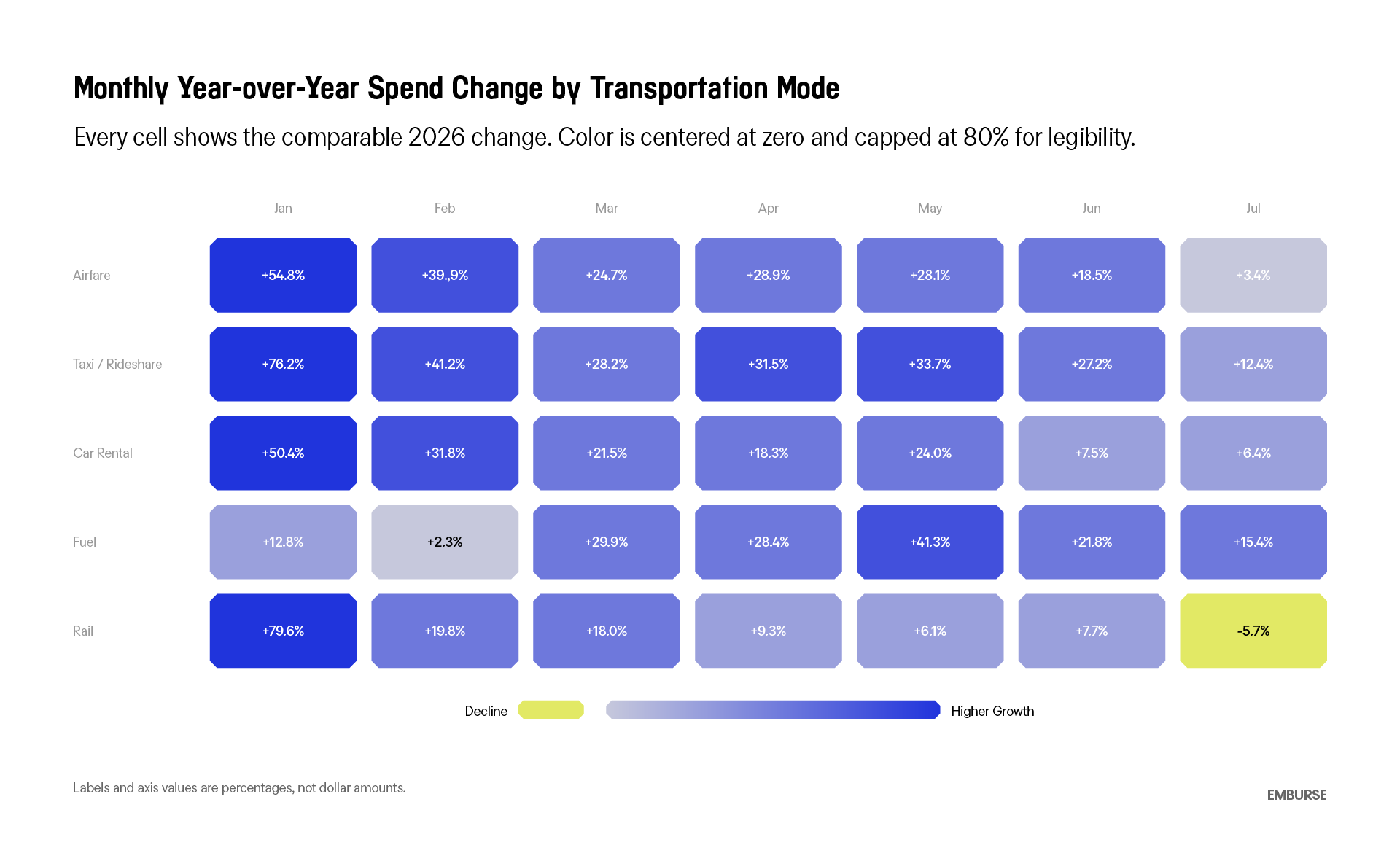
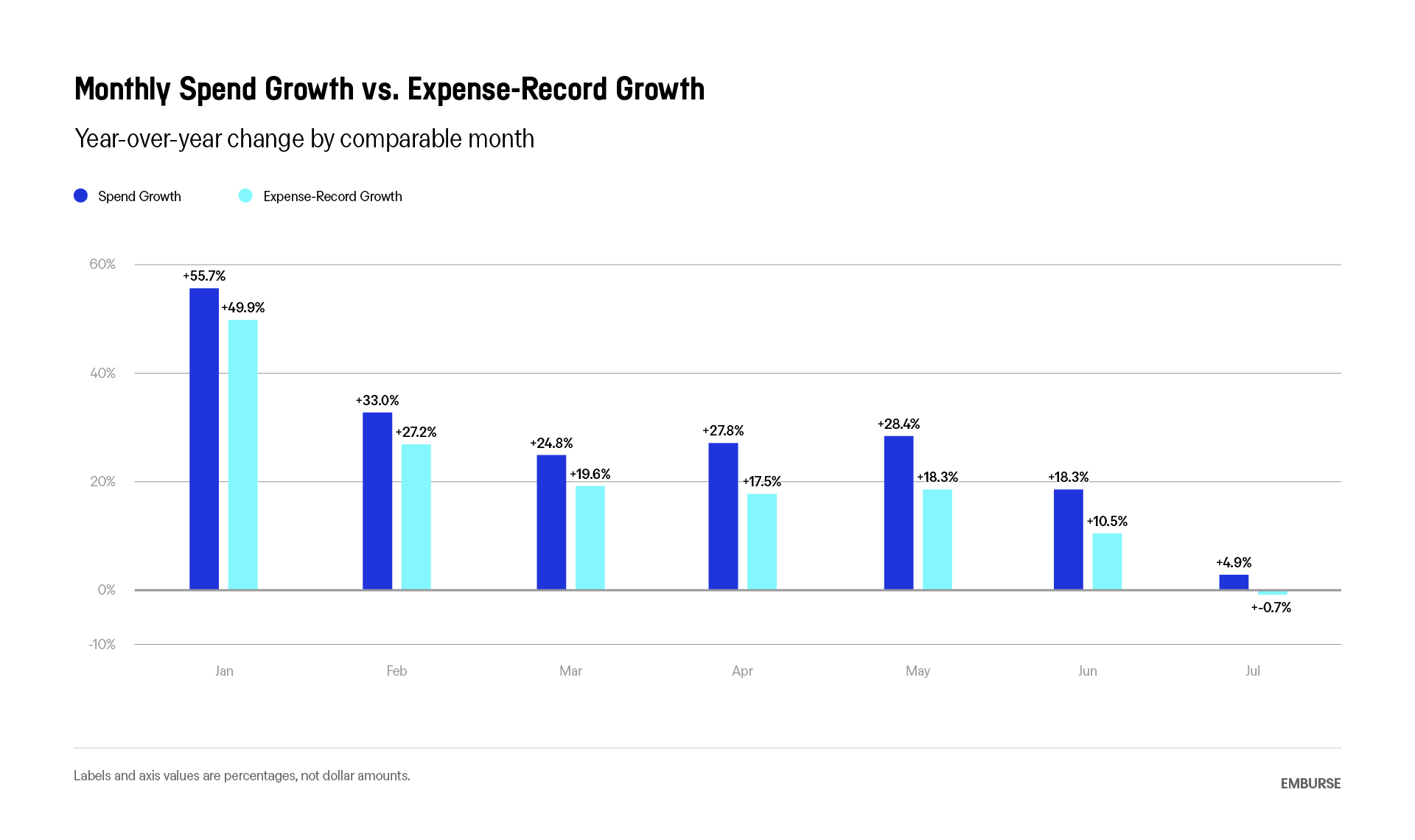
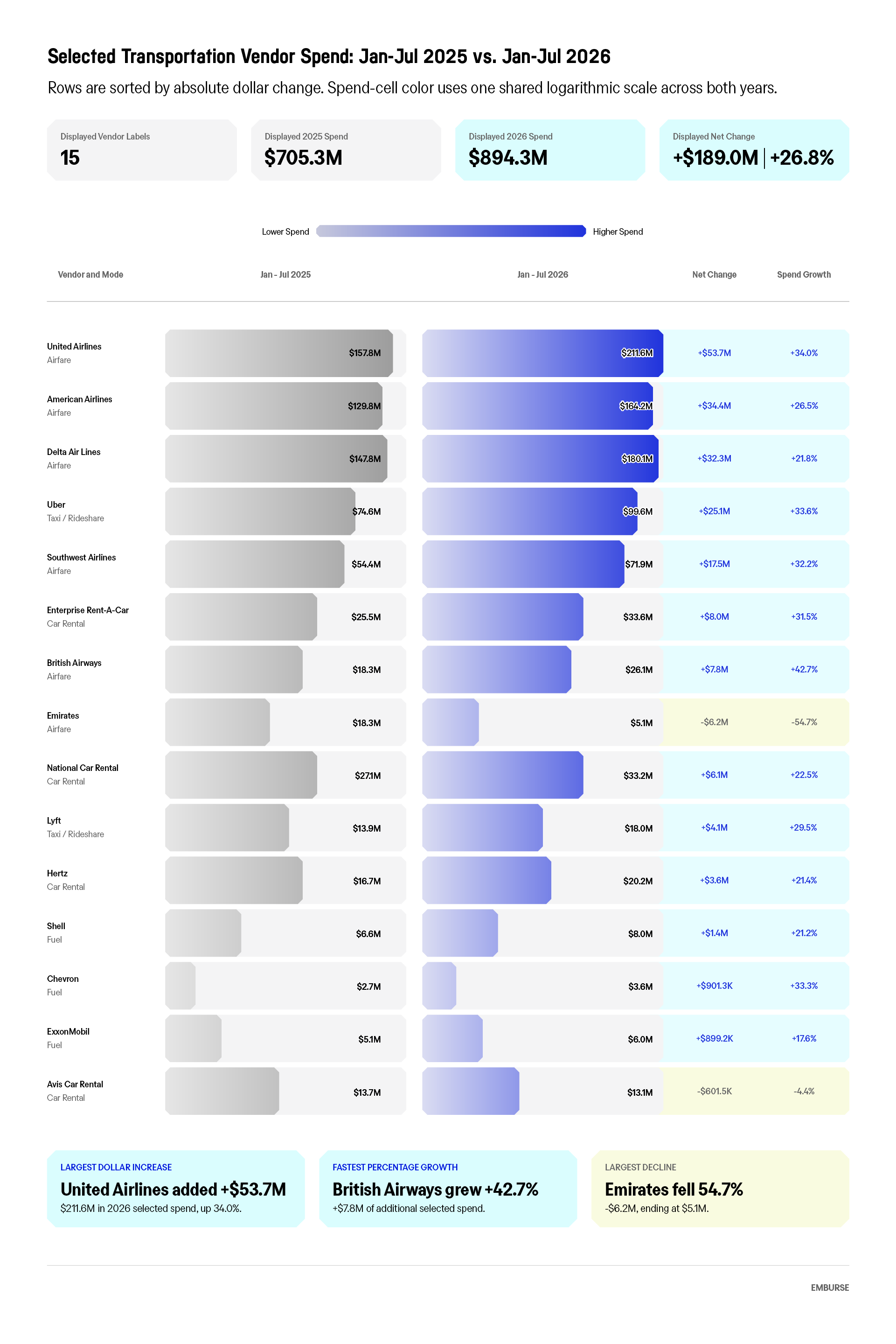
New data from the Emburse Expense Intelligence Report: Travel Edition shows why that perspective matters. From January through July 2026, total enterprise expense spend increased 4.8% year over year. Transportation spend rose 26.7% and accounted for approximately 42% of the dollar increase in overall spend, despite representing only 11% of total spend. Airfare generated most of that growth, while rideshare and car rental also increased.
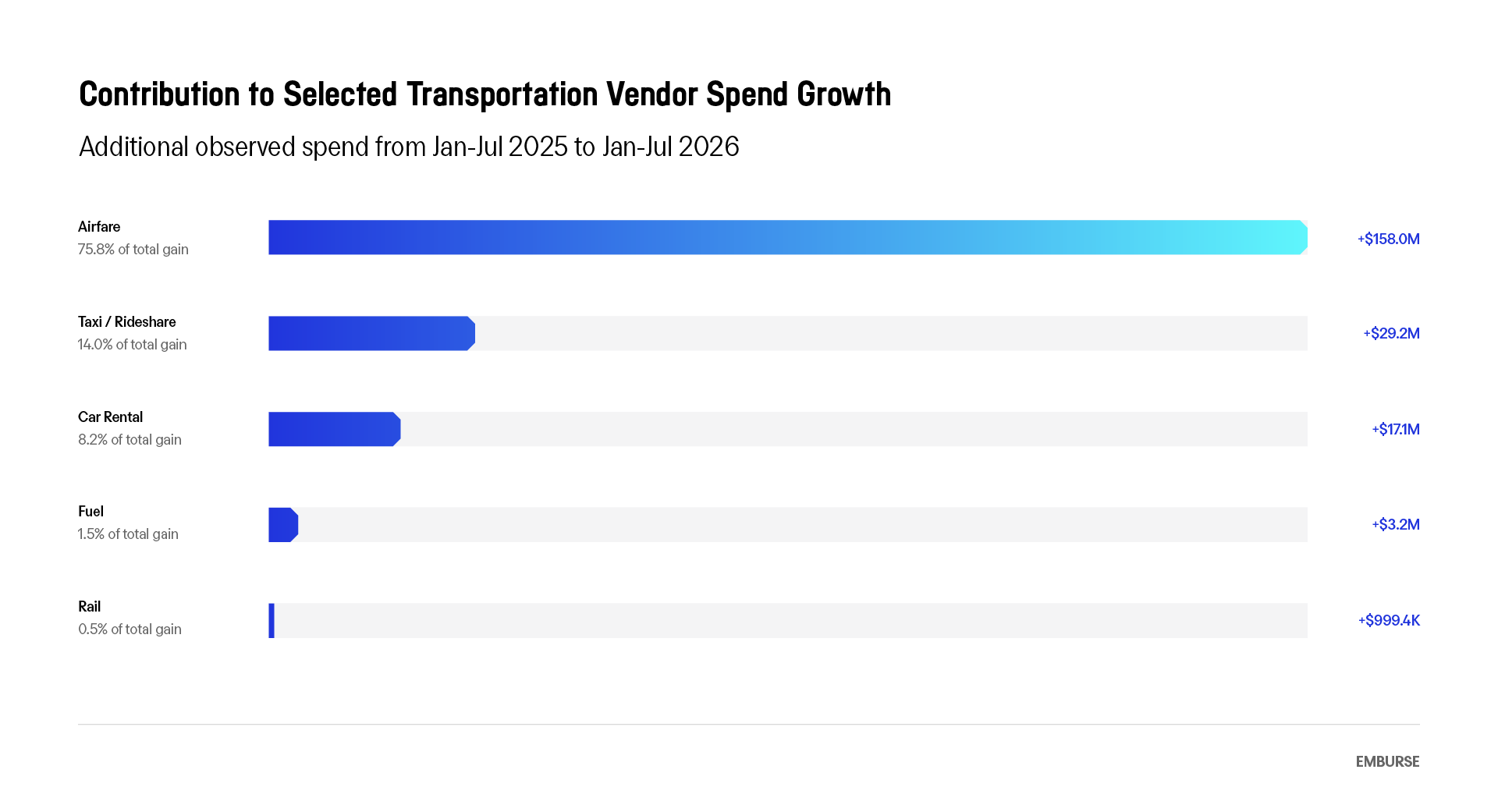
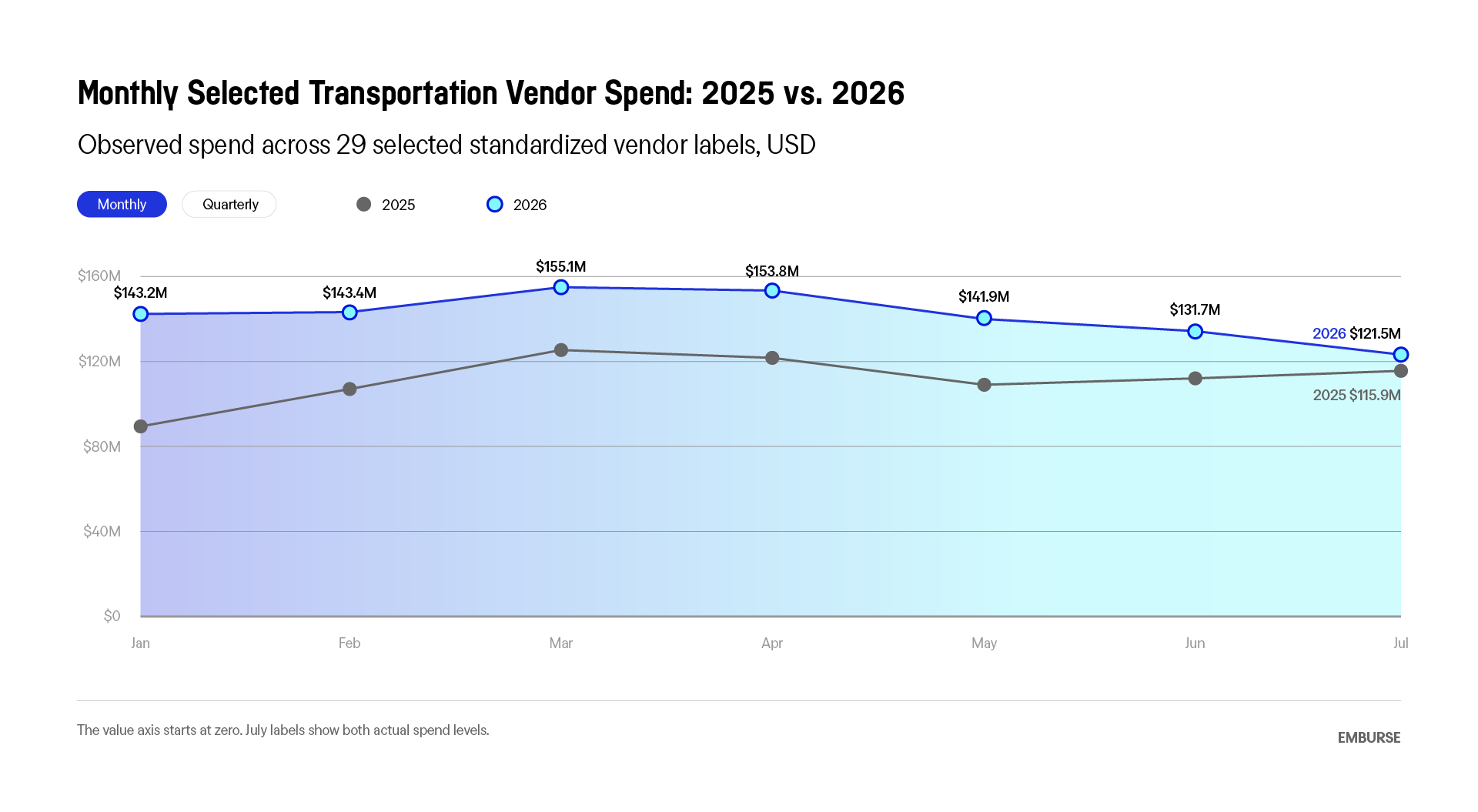
Rising travel volume is an operational signal, not simply a cost problem. It can help finance, operations, and commercial leaders ask sharper questions about where the business is investing and what may be changing.
Travel spending is a business signal
The increase in transportation spend was driven more by volume than by price. The average transportation expense claim rose 6.7%, while the number of transportation purchases increased 18.7%. In other words, employees appear to be taking more business trips, not simply paying more for travel.
That distinction gives leaders a simple decision lens: What changed? Is it intentional? What response is needed now, and for the future?
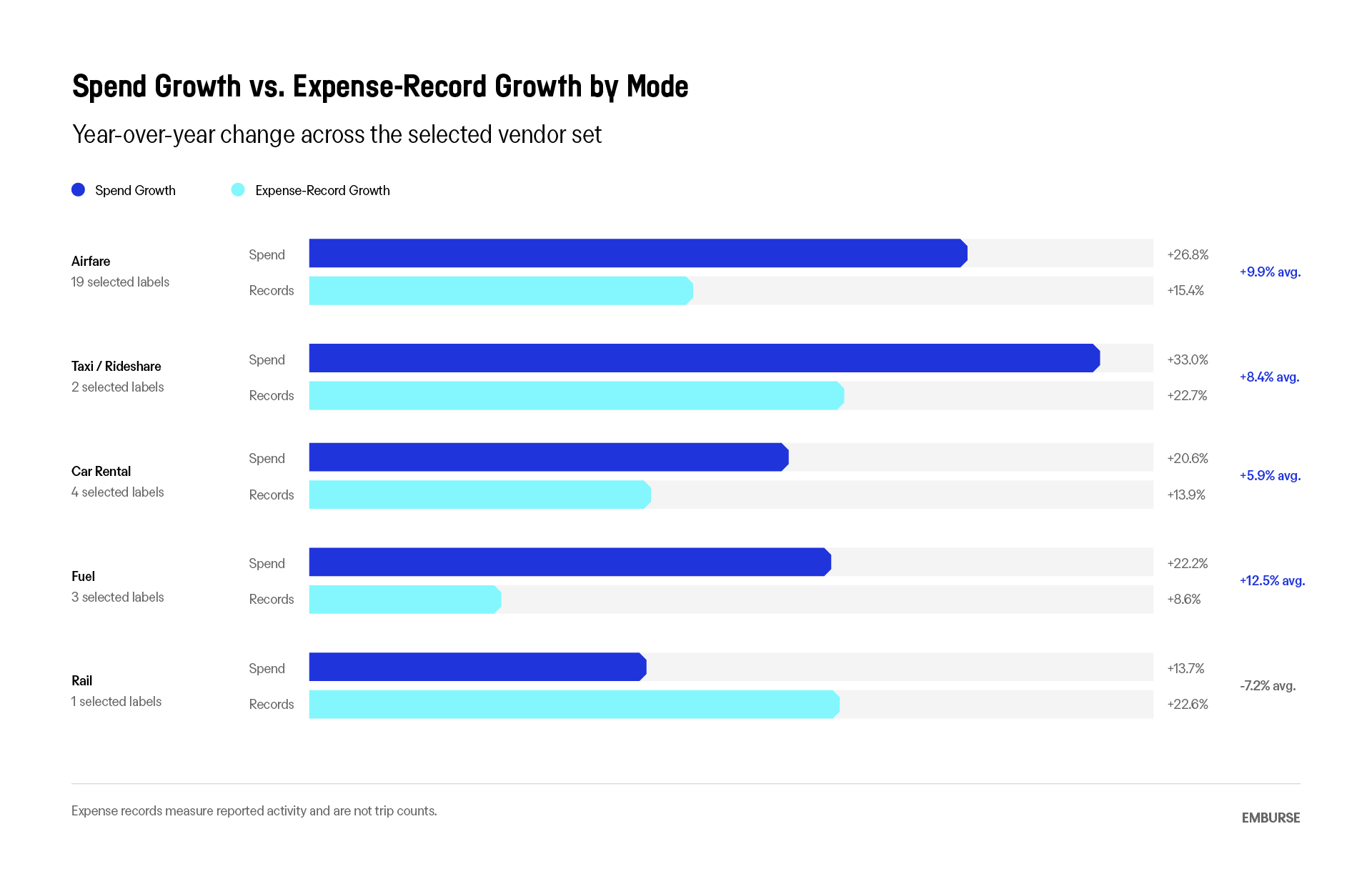
More flights, rideshares, and rental cars can indicate that teams are meeting customers in person, visiting sites, supporting field operations, or developing new markets. No single transaction explains a strategy, but sustained changes in travel patterns can show where an organization is concentrating its time and resources.
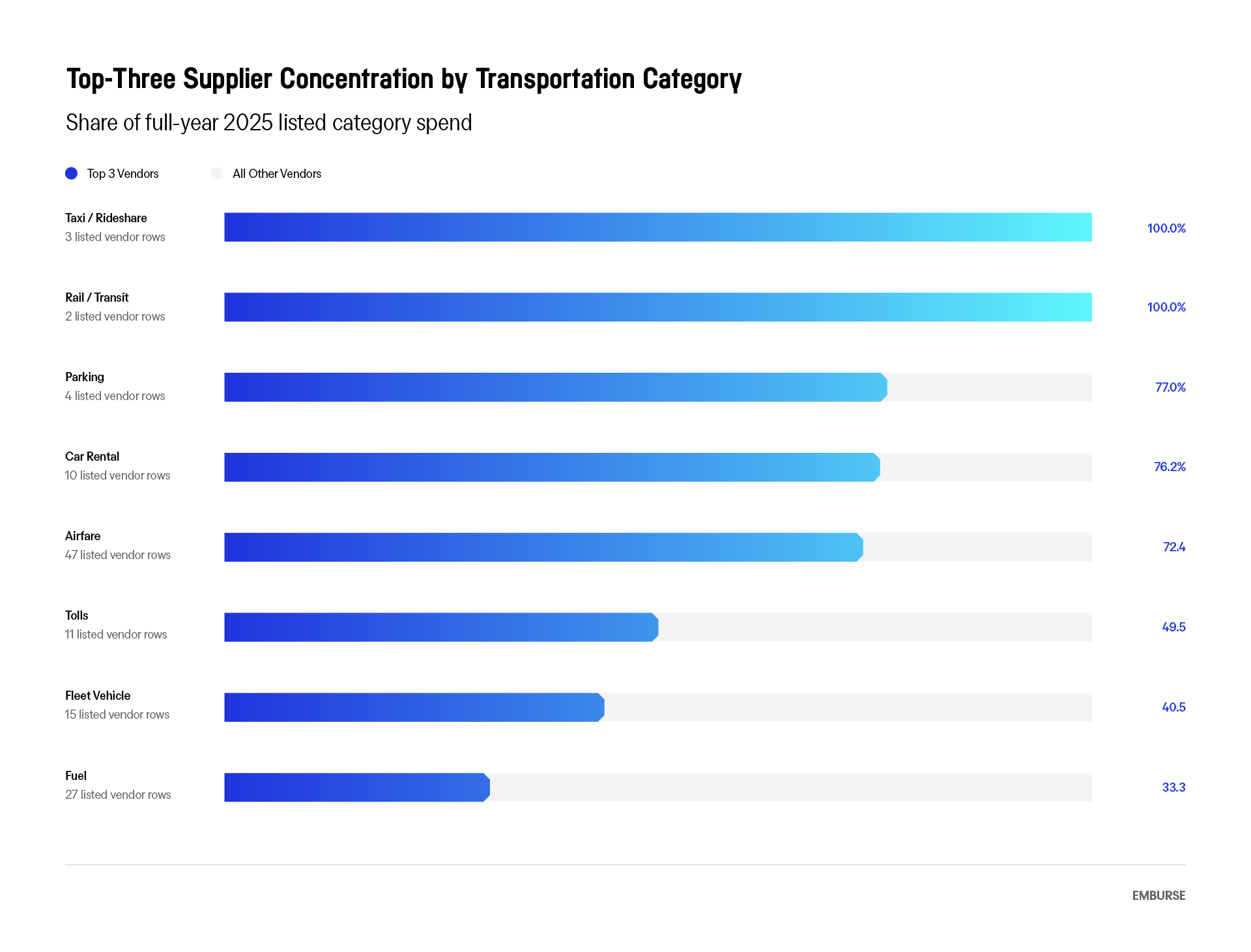
For finance leaders, rising transportation spend should trigger a review of cash-flow impact, policy exceptions, and preferred-supplier adoption. Procurement teams can compare travel growth by business unit and market, then use supplier concentration to renegotiate rates or strengthen preferred programs. More than 70% of spending across several transportation categories in the index was concentrated among the top three suppliers.
That is where travel data becomes operational. With Emburse Analytics, finance and travel teams can bring together travel, expense, and card data to see trip costs, supplier concentration, spend leakage, and compliance in context. Emburse Travel Audit adds a practical control point by helping teams identify issues with booked rates, fares, and supplier agreements before a trip—and risky expenses afterward.
Revenue and operations leaders can use the same internal signals differently. Increased travel may suggest commercial teams are investing in customer relationships or new territories. When leaders compare those patterns with hiring plans, site openings, field operations needs, and pipeline priorities, they can validate whether the activity aligns with the business plan. The point is not to treat spend as a sales trigger; it is to use the context to ask more relevant questions.
Travel is important, but it is not the whole picture
A travel-first view of spend does not capture the full complexity finance teams manage today.
In the categorized vendor dataset, airfare and hotels represented 46.2% of spend. Travel remains material, but significant spending also sits across categories such as software, office supplies, property expenses, professional services, and advertising.
Those categories behave differently and should be managed accordingly. A concentrated category may justify supplier negotiations or stronger preferred programs. A fragmented category may require clearer buying channels, stronger renewal ownership, and earlier visibility into exceptions.
Travel is only one channel through which business activity shows up. Emburse Spend and Emburse Cards give finance teams more timely visibility and control over employee and card-based spend, so they can distinguish a one-off exception from a pattern that warrants intervention.
The goal is not to manage every category in the same way. It is to give finance teams a complete view of spending so they can investigate anomalies, renegotiate where concentration creates leverage, adjust controls, forecast demand, or validate a business hypothesis.
Look for spend patterns, not isolated transactions
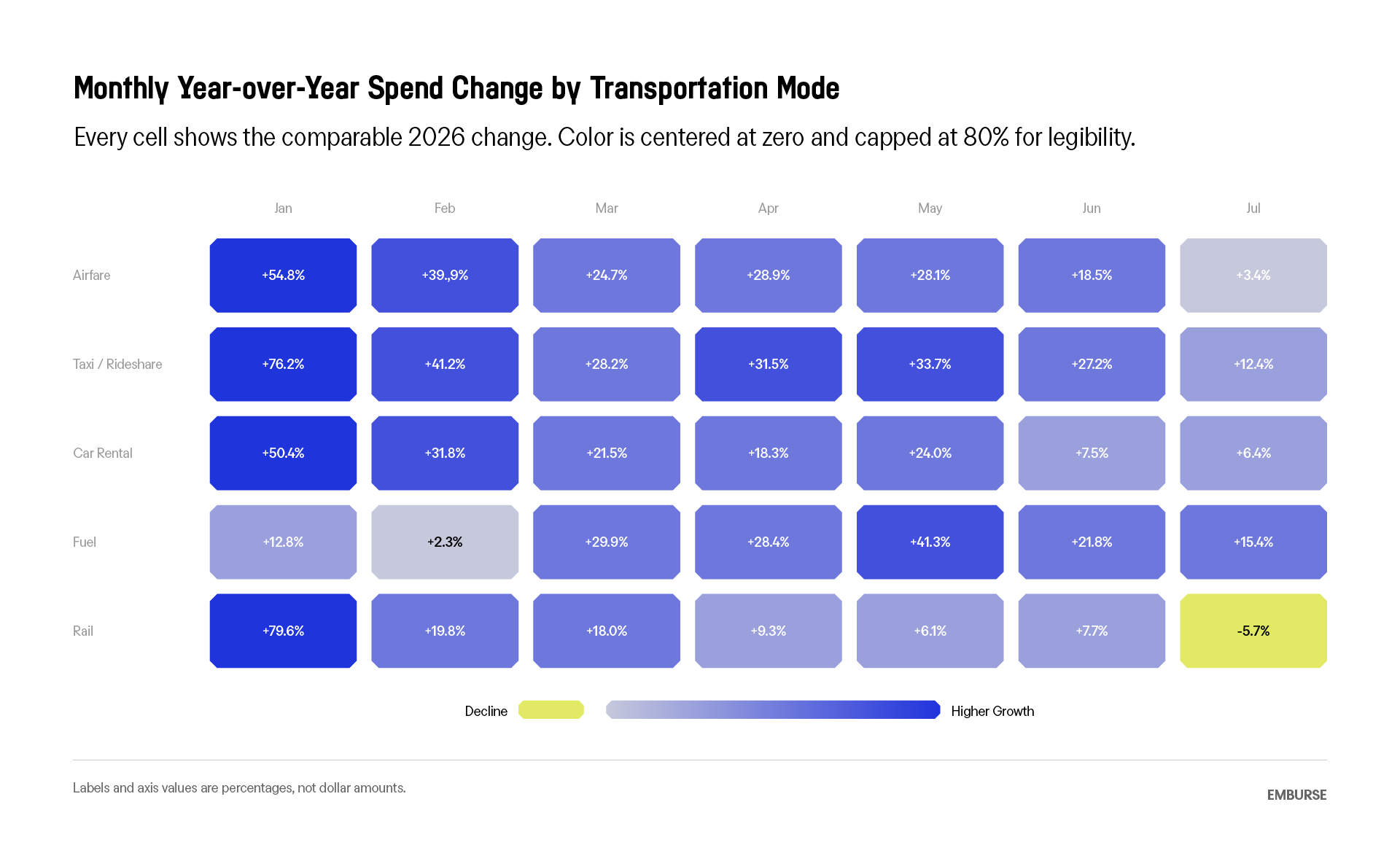
The value of spend insight comes from patterns over time. A single airline charge or supply purchase is simply an expense. A sustained increase in travel, facilities, industrial supply, or software spending may indicate that something larger is changing inside an organization.
The most effective leaders combine spend information with what they already know. Is the organization hiring in a new region? Has it opened a site or announced an expansion? Are more employees travelling to a particular market? Are renewals increasing across a business unit? When spending patterns align with other business signals, teams can form a clearer view of what may be happening as they grow.
Spend data should inform a hypothesis, not become a conclusion. It can prompt a leader to investigate, validate, and ask smarter questions but should not replace direct conversations with customers, employees, or partners.
From signal to action
Seeing a change in spend is only the first step. Finance teams also need confidence in the data and a way to respond without slowing down the business. Emburse brings travel, expense, cards, invoices, and payments into connected workflows, giving teams a clearer view of where money is going and what needs attention.
For employee spend, Emburse Assurance applies an AI-powered compliance layer before and after submission to flag potential errors, fraud, and policy violations early. For supplier spend, Emburse AP helps teams capture, approve, and pay invoices in a connected process, making it easier to see approval status, payment activity, and exceptions. Together, these capabilities help turn a spend pattern into an informed decision—whether that means revisiting a policy, addressing a supplier relationship, protecting cash flow, or investigating a potential risk.
A more complete view of growth
Growth is rarely announced in a single report. It shows up in the decisions businesses make every day: where their teams travel, what they buy, which suppliers they rely on, and where they invest.
Leaders who read spend patterns in context can detect operational change earlier and act with more confidence.